Beyond the Logo: Creating Custom Barware for Your Distillery
A visitor can leave your distillery with its name printed on an object. A more considered product can also carry something of the place, the tasting experience or the way you want people to enjoy your spirits.
Creating custom barware for distilleries begins with deciding what that object should do. The logo has a role, but so do its shape, materials, handling and presentation. A clear product idea gives each of those choices a purpose, whether you customise an existing design or develop something new.
Start with a moment in the customer's day
Picture the product in use before choosing its decoration. Will a visitor place it on a shelf after a tour, bring it out when friends visit, or carry it to a tasting? Each situation suggests different priorities.
For a display piece, consider how the product looks from the front and how much space it needs. For something used at a table, consider access, handling and where the accompanying items sit. For a gift bought during a trip, include the packed size and the customer's journey home in the brief.
Try describing the idea in one sentence: “A compact piece that lets visitors recreate a tasting moment at home.” This is an illustrative starting point, not a finished specification. It is still more useful than “premium branded merchandise,” because it gives the design team a scene to work towards.
Turn the brand story into a design choice
A brand story becomes useful to product development when it changes a decision. A strong connection to a place might suggest a map detail. An emphasis on oak could make the visible wood surface important. A tasting ritual might suggest how a vessel and glass should sit together.
Choose one main idea before adding supporting details. If every available surface carries a different message, the result may become difficult to read. Decide what a customer should notice first, then use the other surfaces to support it.
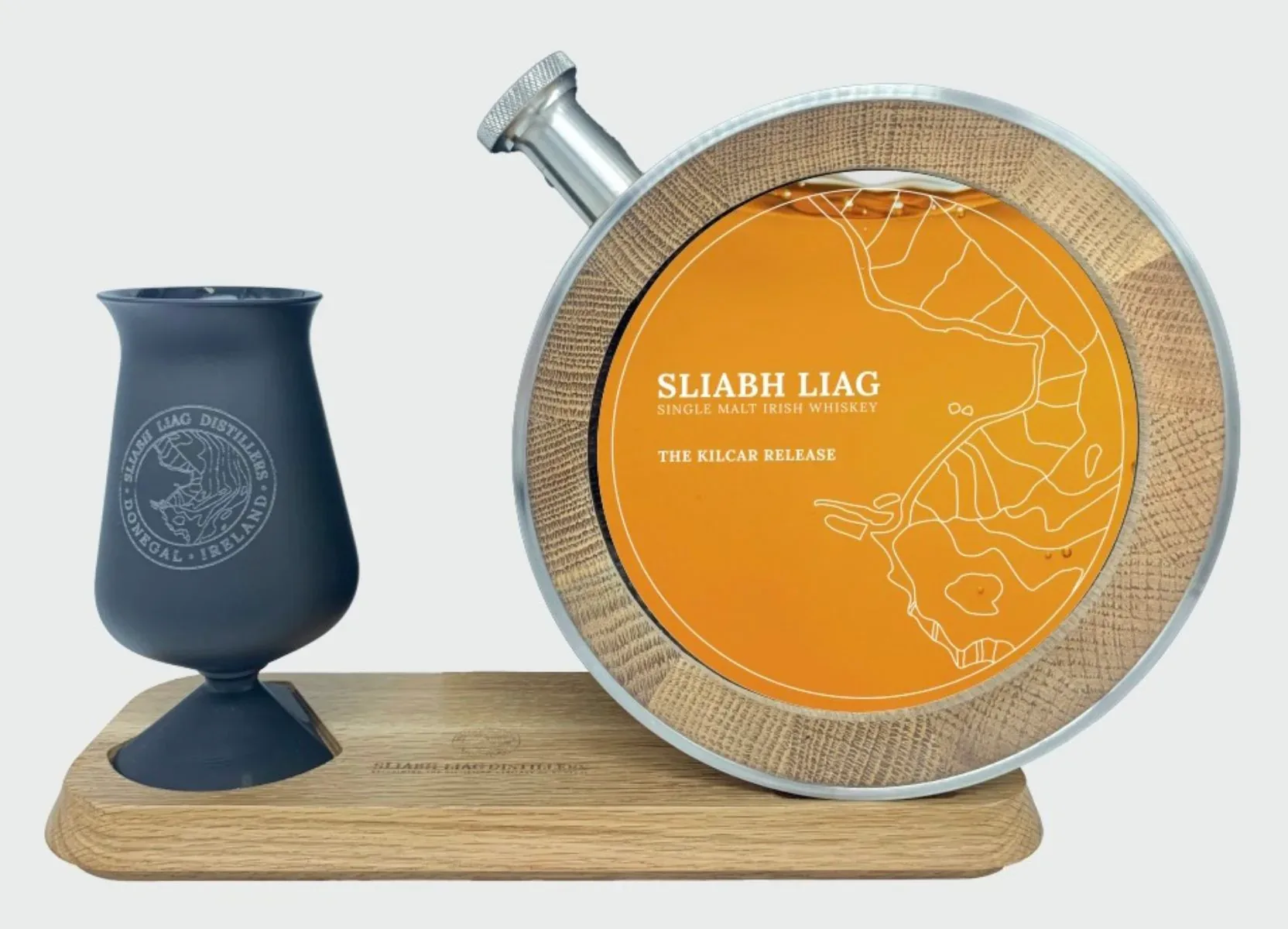
Junhe's case study gallery includes a Sliabh Liag example with map artwork on the decanter's circular viewing panel. It offers a concrete design reference: a recognisable visual element can make a familiar product format specific to a brand. For a new brief, consider which element of your own identity could perform that role without copying another brand's artwork.
Choose how much development the idea needs
An existing product is a useful starting point when its form and function already suit the intended use. You can concentrate on the identity, selected configuration and packaging instead of redefining the whole object.
For example, Junhe's 700ml Visible Oak Whiskey Decanter already combines a circular oak vessel, glass panels and a wooden base. Its listed branding locations include the base and glass panels. If that arrangement fits your idea, it gives the project a specific product to discuss.
A new design becomes relevant when the central requirement cannot be met by the existing range. That might be a different form, a particular arrangement of components or a function that needs to be developed. Bring the requirement to the conversation before committing to a detailed shape; feasibility, sample costs and timing need to be assessed for that brief.
The distinction helps keep effort focused. Custom designed barware does not need a new component everywhere. The right extent of development depends on which changes make the product more useful and more recognisably yours.
Give materials and proportions a job
Discuss material choices through what customers will see, touch and use. For a visible oak decanter, the wood, transparent panel and base each contribute a different surface. Consider whether the brand should sit quietly beneath the vessel, appear on the glass, or be supported by the packaging around it.
Look at proportions with the whole arrangement in view. A graphic that feels restrained on a screen may dominate a small glass panel. A base that looks balanced by itself may need more room when paired with the intended accessories. Use actual product dimensions when discussing the layout.
Keep function in the same conversation. A decorative change should leave the product practical to handle and use. Where a proposal changes the structure or the way parts fit together, ask for that detail to be evaluated during development rather than treating it as a surface artwork decision.
Design the product and packaging together
Packaging is another place to express the central idea. It also has to accommodate the actual contents and make them straightforward to remove. Decide what belongs in the set before designing a presentation around it.
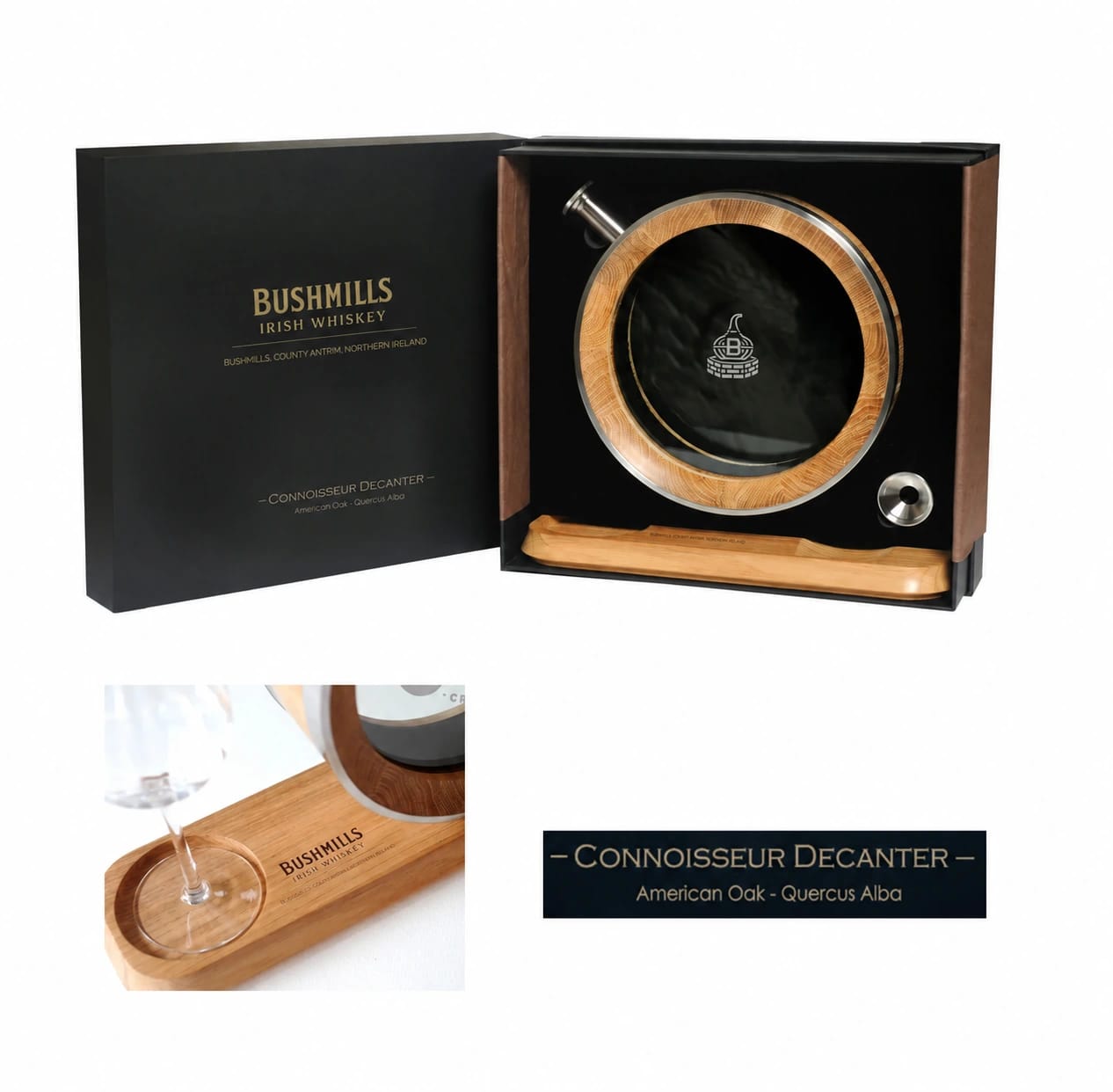
In the Bushmills example in Junhe's gallery, the decanter, base and gift box are presented together. The useful reference is the coordination of the pieces: review the open set as a complete arrangement, then consider what remains visible when it is closed. A photograph of a branded set should not be read as a standard list of included accessories for another order.
Junhe's custom packaging options include structures, materials, inserts and finishes to discuss around your product. A book-style opening could give a short brand story a place beside the object; a simpler lift-off lid could keep attention on the contents. Choose the opening experience that supports the idea, then resolve the dimensions and protection requirements around the actual pieces.
Prepare a brief that leaves room for useful ideas
You do not need a complete product drawing to start a development conversation. A concise brief should establish the decisions that matter most:
- Use and audience: where the product will be used, who receives it and what it should help them do.
- Brand elements: the story, visual references and approved identity elements that should guide the design.
- Expected quantity: the initial order estimate and whether you anticipate repeat orders.
- Budget range: the target for the product and packaging, with development costs discussed separately.
- Target time: the date the finished items are needed and any event or launch it depends on.
Add the complete set contents if already decided, plus any dimensions the product must fit. Separate essential requirements from preferences so the team can suggest alternatives without losing the purpose of the project.
Bring a product idea to the next conversation
The strongest starting point is a clear connection between the brand, the object and the person who will use it. That connection can guide an existing product's presentation or become the reason to develop a new form.
Discuss your custom barware project with Junhe. Share the intended use, brand references, expected quantity, budget range and target date. From there, we can discuss a suitable product direction and the development work it requires.
Let’s create something for your brand.
Considering a product for your brand? Discuss an existing original design or a new idea with our design and manufacturing team.
Discuss Your Project