Custom Whiskey Decanters: A Guide to Branding and Samples
A custom whiskey decanter project often begins with a logo file. The more useful starting point is the finished experience: who will receive the product, where will they display it, and what should they notice when they open the box?
For a distillery shop, a corporate gift or a brand event, those answers guide the choice of vessel, branding surface and packaging. This guide explains what to prepare before requesting a quote, using Junhe's 700ml Visible Oak Whiskey Decanter as a practical reference.
Define the product before adding the identity
“Custom” can describe several different requests. Adding a logo to an existing product is different from changing its dimensions or developing a new form. Separate these in your brief so the supplier can assess the right work.
If the existing 700ml Visible Oak Whiskey Decanter suits your project, begin with its current specification and the branding you want to add. Its oak body, glass panels and wooden base already establish the product's visual character.
If you need a different capacity, construction or function, describe that requirement at the beginning. A new product design needs its own assessment of development, sampling and production. An illustration of a modified product is a starting point for discussion, rather than confirmation that the change can be produced on the same terms.
Still choosing a format? Compare the 700ml decanter and 3L mini oak barrel before finalising the product brief.
Give each branding surface a clear job
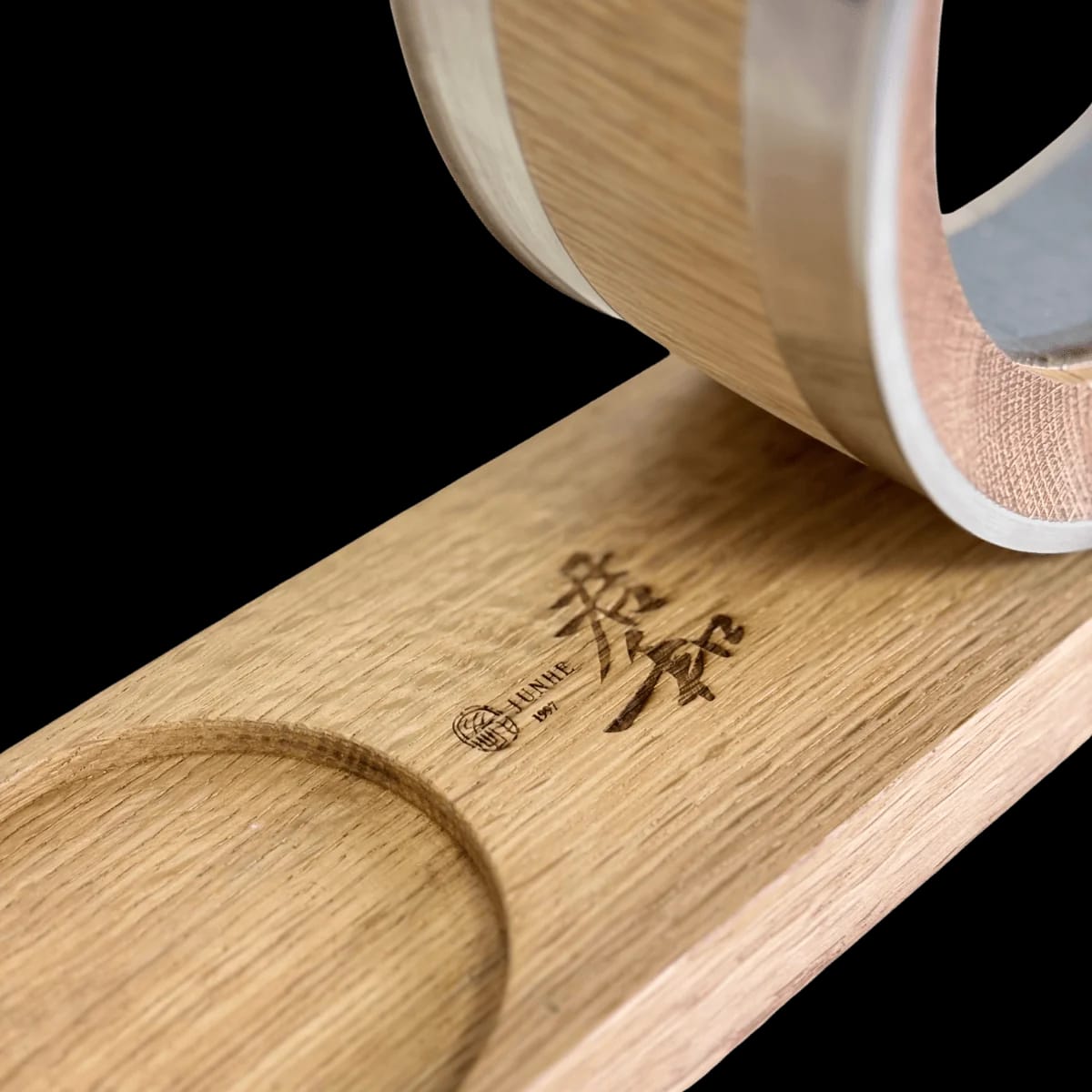
The 700ml design lists custom branding on the oak base and glass panels. Think about what each surface should communicate before placing the same artwork everywhere.
The base can carry the main brand identity while leaving the circular vessel visually open. A glass-panel mark can become part of the front view. In either case, ask for the actual available marking area and review the proposed layout at its intended size.
Consider the background behind the mark. Wood grain creates variation, and glass can be viewed against an empty vessel, a filled vessel or a busy shelf. Check the proposed design in the setting that matters to the customer.
For a distillery, one recognisable logo may be enough on the product itself. A longer brand story, tasting-room memory or gift message can move to a card or the packaging. This gives each element room to be read.
Prepare artwork that can be evaluated
Send vector artwork where available, together with a reference showing the intended appearance. Include the approved spelling, logo version and any wording that must appear exactly as supplied.
If your brand has several variations, identify the one intended for this product. A full crest, a simplified symbol and a horizontal wordmark can need different amounts of space. Let the supplier see the available options, but make the approval decision explicit.
Ask for a proof that identifies placement, orientation and proposed size. Check it at actual scale instead of judging only an enlarged screen image. Fine details that look clear on a monitor may be difficult to read on a small marking area.
Also distinguish an artwork proof from a physical sample. A proof checks the layout; a sample lets you assess how that layout appears on the selected material. Keep the approved files and sample reference together so later revisions are easy to trace.
Review the sample as a finished object
A useful sample review covers more than the logo. Place the product on its base, look at it from the customer's likely viewing angle and compare it with the agreed specification.
Record your feedback under a few practical headings:
- Product: the chosen model, material options and included components.
- Branding: wording, position, orientation, readability and the appearance of the mark.
- Presentation: the relationship between vessel, base, packaging and any printed insert.
- Handling: how the product is removed from the box and assembled for display.
- Instructions: the product-specific use and care information intended for the recipient.
Ask which variations in the natural material should be expected across an order, and agree how the approved sample will be used as the production reference. Photograph the reviewed sample and make revision notes specific: “move the mark towards the centre” is more useful with an annotated position than on its own.
Build packaging around the approved contents
Define everything the box will contain before deciding its structure. A vessel and base need different support from a set that also contains glassware or other accessories.
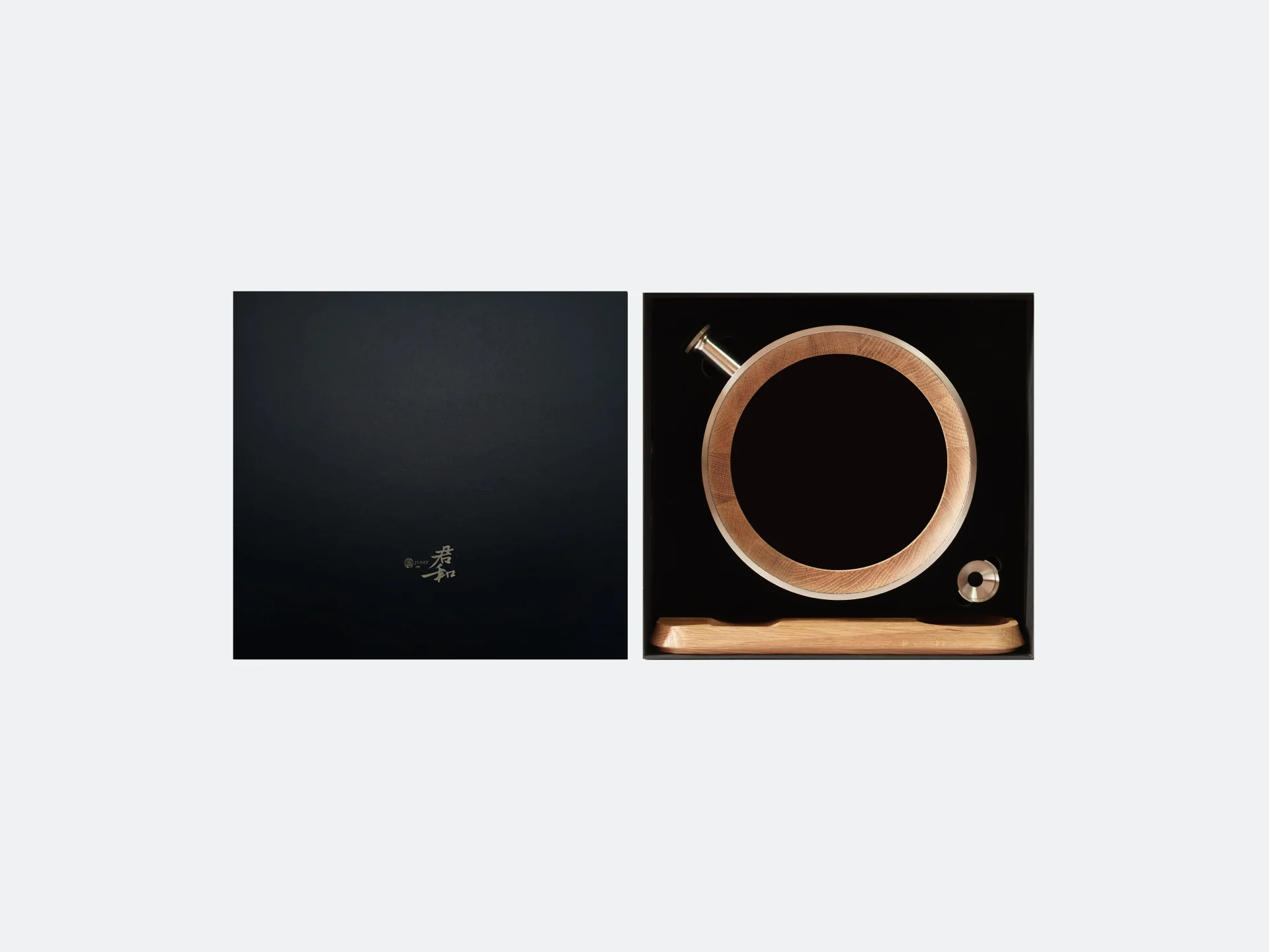
Junhe's custom packaging collection includes structures such as lift-off lids, magnetic flip-top boxes and book-style boxes. Discuss the opening experience together with the insert, rather than selecting the exterior in isolation.
For example, if a message inside the lid is part of the gift, consider what the recipient sees before lifting out the product. Keep the information useful: what the product is, how the parts belong together and where to find its care instructions.
Request confirmation of the packed dimensions and the agreed transport packaging. An attractive presentation box and the protection required for the delivery route are related decisions, but they are not the same specification.
Separate sampling, production and arrival dates
State the required arrival date as well as the event date. Then ask for a schedule that accounts for artwork review, sampling, revisions, production and transport.
Junhe currently offers samples from one unit, quoted separately at a higher unit cost than bulk orders. Existing product samples usually take about one week, and bulk production usually takes 30 days, with the final schedule confirmed in the quote. New product development is assessed for the individual brief.
Treat those figures as planning references. Confirm the timing for your particular branding and packaging, and distinguish production completion from delivery to your destination.
Send a brief that makes the next step clear
For an initial enquiry, bring together the product reference, intended recipient, estimated quantity, logo files, preferred branding position, packaging contents, budget range and required destination and arrival date. Mark unresolved choices as questions so they can be addressed before sample approval.
A well-prepared custom whiskey decanter project connects the object, identity and presentation. If you have a product in mind, share your branding brief with Junhe to discuss the specification and sample requirements.
Let’s create something for your brand.
Considering a product for your brand? Discuss an existing original design or a new idea with our design and manufacturing team.
Discuss Your Project