
Do Mini Oak Barrels Age Whiskey Faster? What Actually Changes
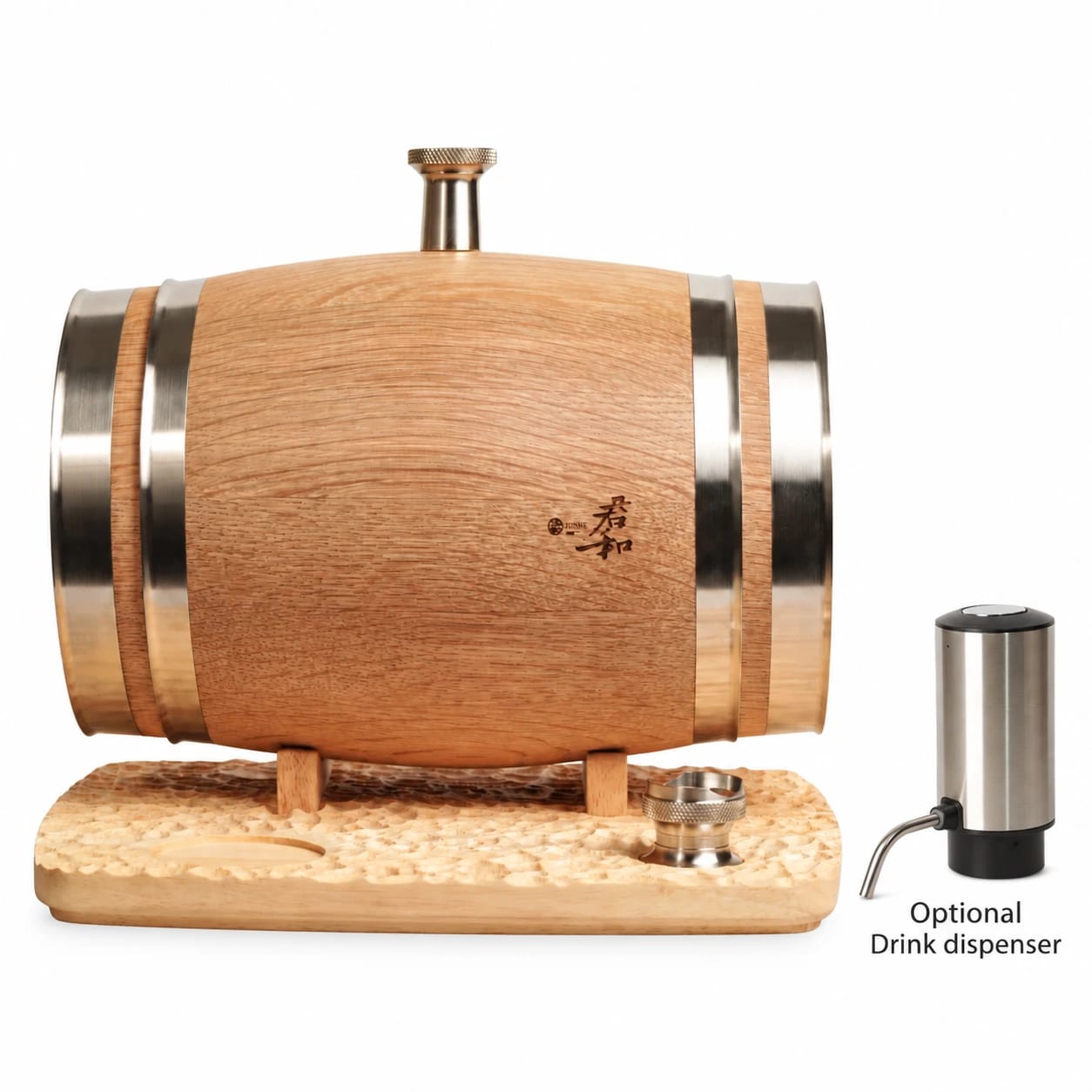
A mini oak barrel can bring oak character into a spirit more quickly, but that does not mean every part of whiskey maturation speeds up together. A noticeable change in colour or aroma is a change worth exploring. It is not proof that a few weeks in a small barrel have reproduced years in a warehouse.
For anyone choosing a mini oak barrel for aging, this distinction helps set a useful goal: discovering how a particular spirit responds to a particular vessel. The most interesting question is what changes, and whether you enjoy the result.
Why smaller barrels can change a spirit sooner
For vessels with similar shapes and construction, reducing the size increases the internal surface area relative to the volume they hold. When that surface is oak, each litre has more wood contact available. This helps explain why small barrels attract interest for trials and small batches.
A study of 2-, 3-, 5- and 10-gallon barrels tracked four wood-derived compounds over 200 days and reported rapid extraction associated with higher wood surface area relative to volume. Those were specific barrels and conditions, not a timetable for every miniature vessel. Read the small-barrel extraction study.
Capacity alone therefore gives an incomplete comparison. Two products described as mini barrels may have different shapes, wooden surfaces and end panels. Before comparing their expected performance, establish which parts of each vessel actually put wood in contact with the spirit.
Extraction and maturation are different questions
Extraction describes compounds moving from the wood into the liquid. Maturation also involves reactions within the spirit and interactions with the surrounding atmosphere. Oxidation and evaporation contribute to the changing composition, so adding wood character is only part of the story. The extraction study discusses these interacting processes.
Research comparing 6-litre miniature casks with standard barrels found different patterns of wood extraction and different flavour characteristics. Under that study's conditions, the miniature-cask spirit did not reproduce the standard-cask result. The researchers used uncharred American white oak, so the finding should not become a blanket judgement about all small barrels. It does show why a smaller vessel cannot simply be treated as the same process on a faster clock. Read the miniature-cask comparison.
For a buyer, the practical implication is straightforward. Ask what kind of change you want to explore, rather than asking how many years a month in the barrel is supposedly worth.
Char treatment changes the question too
The inside of an oak barrel is a prepared surface. Its heat treatment is part of the specification, and a char number should not be read as a simple strength setting for the finished drink.
In a 2025 experiment using charred oak pieces, researchers found that the way char formed affected the compounds they tracked; the temperature used to form the char did not directly predict those compounds. That laboratory setup was not a test of a Junhe barrel, but it illustrates why “more char means faster maturation” is too simple a buying rule. Read the charring research.
When requesting a sample, record the oak option and agreed interior treatment together. This gives you a defined starting point for discussion if you later want to compare another specification. Changing several details at once makes your own observations harder to interpret.
What a glass head changes
Junhe's 3L Mini Oak Whiskey Barrel combines an oak body with dual tempered-glass panels and stainless steel bands. American white oak and Mongolian oak are available options, with customisable char levels from 1 to 4.
Glass is part of the liquid-contact surface, but it does not supply oak extractives. Consequently, a glass-head barrel should not be assigned the same wood-contact ratio as an all-wood barrel merely because both hold 3 litres. Exterior dimensions are also insufficient to calculate the exact wetted oak area.
The useful advantage of the viewing panels is visibility. You can see the contents without treating the vessel as a sealed visual mystery. That makes the design relevant to a tasting-room conversation or a personal observation project, while flavour still needs to be assessed separately. Our glass oak barrel guide explains the construction and viewing features in more detail.
Start with the whiskey you already have
The starting spirit matters to the purpose of your project. If you fill a mini oak whiskey barrel with an already matured whiskey, you are exploring an additional period of wood contact. You are not beginning with the same material as a distillery filling a cask with new make spirit.
Write down what you like about the original whiskey before making a change. Perhaps you want its existing character to remain prominent, or perhaps you want to explore a more noticeable oak influence. Those are different preferences, and neither can be selected by a capacity label.
A simple approach is to retain a reference portion in a suitable, tightly closed glass container and record the original bottle details. When comparing later, describe the differences you actually notice. “More woody than the reference” tells you more than “looks older.” Follow the barrel's confirmed preparation, filling and care instructions rather than borrowing a procedure intended for a different construction.
Colour is an observation rather than a finish line
A darker appearance can make a project feel successful before you have considered its aroma or taste. Use visual notes as one part of your record. Keep lighting and the viewing background similar if you take photographs, and avoid treating a dramatic picture as a measure of maturity.
The same applies to strong oak character. Whether a change improves the drink is a separate judgement from whether the change is easy to detect. Your comparison should ask whether you prefer the result, not just whether you can identify a difference.
Choose a sample around a clear purpose
A 3L whiskey barrel gives you a concrete format to investigate, rather than a promised shortcut to an older whiskey. Before ordering, define the spirit, the intended use and the construction you want to evaluate. Keep those details alongside your observations so the next sample discussion has a useful starting point.
Planning a small-batch trial, a tasting-room display or a branded barrel project? Contact Junhe to discuss a 3L sample. Share your intended spirit and purpose so the product specification and usage guidance can be discussed together.
Let’s create something for your brand.
Considering a product for your brand? Discuss an existing original design or a new idea with our design and manufacturing team.
Discuss Your Project