
What Is an Oak Cup? A Guide to Wooden Whiskey Tasting Cups
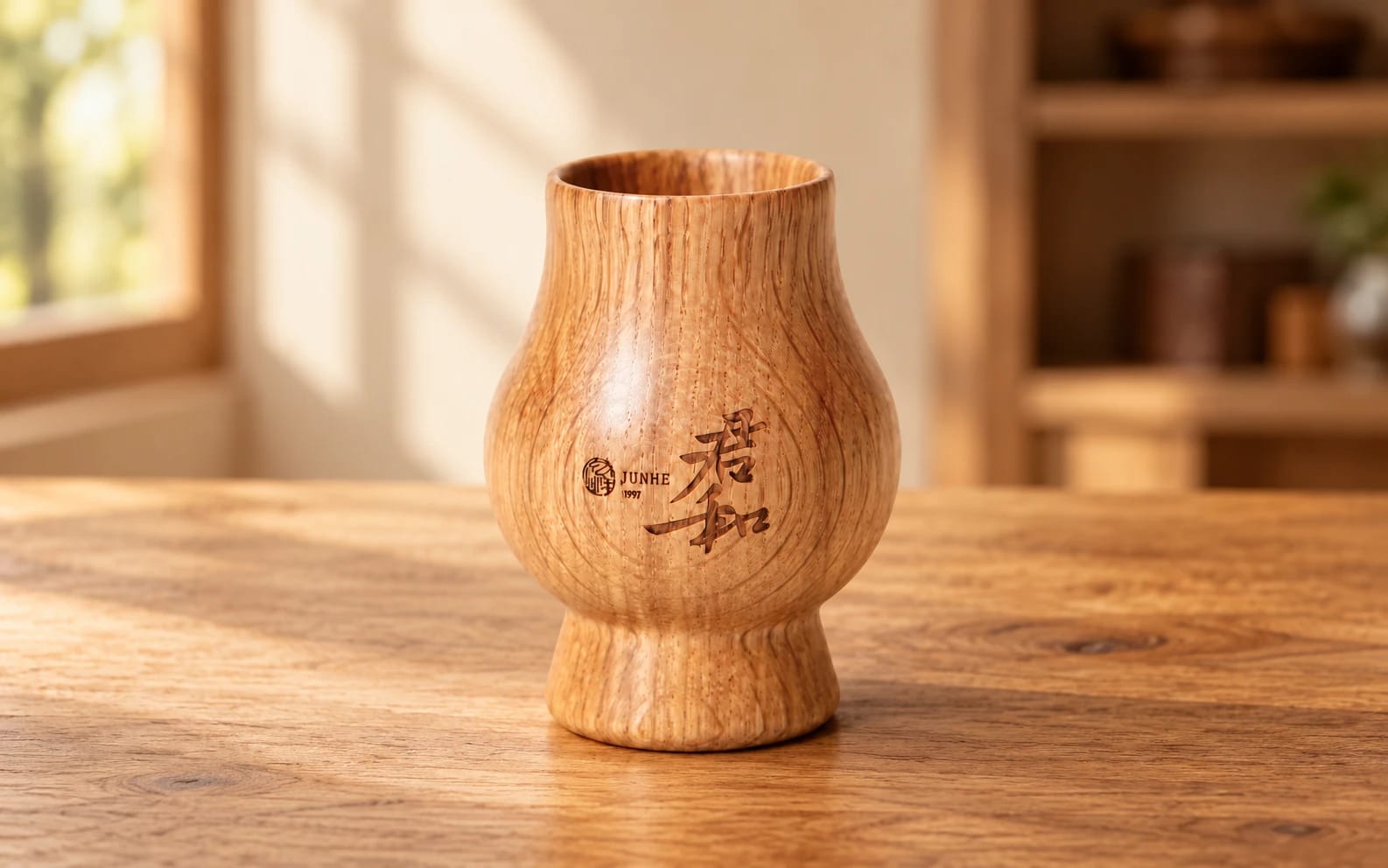
An oak cup brings a different material to the tasting table. Its grain, curved body and rounded rim make it something you notice before the first pour. For a distillery shop, a gift collection or a personal tasting ritual, that physical character is often the starting point.
Choosing a wooden whiskey tasting cup still calls for practical questions. How large is it? How does it feel in the hand? What instructions come with it? Understanding the cup itself helps you decide whether it belongs in your collection and how to introduce it to the person who will use it.
What makes it an oak tasting cup?
An oak cup is a drinking vessel made from oak. The name describes the material, but it does not define one standard shape, capacity or surface treatment. Two cups described as wooden tasting cups may differ considerably in their dimensions and intended use.
Junhe’s Oak Cup is a 60ml design made from American white oak, with a rounded body, a smooth rim and a raised base. Its compact silhouette brings the grain into view from several angles. Those details provide a useful starting point when comparing it with other items for a tasting table or gift display.
What does a 60ml capacity mean?
The stated capacity describes the vessel; it is not a recommended drinking amount or an instruction to fill the cup to the rim. Choose the serving amount separately for the occasion, leaving comfortable space for handling.
For a tasting event, consider the cup alongside the rest of the place setting: water, tasting notes and any other vessels being used. For a gift, think about how the size will be communicated before someone opens the box. Clear capacity information is more useful than a photograph that makes a small cup appear much larger.
Junhe lists dimensions of 91.8 × 59.5mm for this design. Check the product drawing and a physical sample when planning a fitted insert or a display. A capacity figure alone cannot tell you how much shelf or packaging space an item needs.
Look at the rim, body and base together
A cup is handled as a complete object. The rim is the drinking edge, the body is where the hand naturally settles, and the base is what meets the table. Review all three rather than choosing only from a front-facing photograph.
With a sample, notice how easily you can pick it up, hold it and set it down. Look at the rim from above as well as from the side, and check the cup on the type of surface where it will be used. These simple observations help you judge comfort and stability for your setting.
Ask about the interior finish and intended use of the specific product. The word “wooden” does not tell you how every cup has been finished, or whether care instructions for another wooden item will apply.
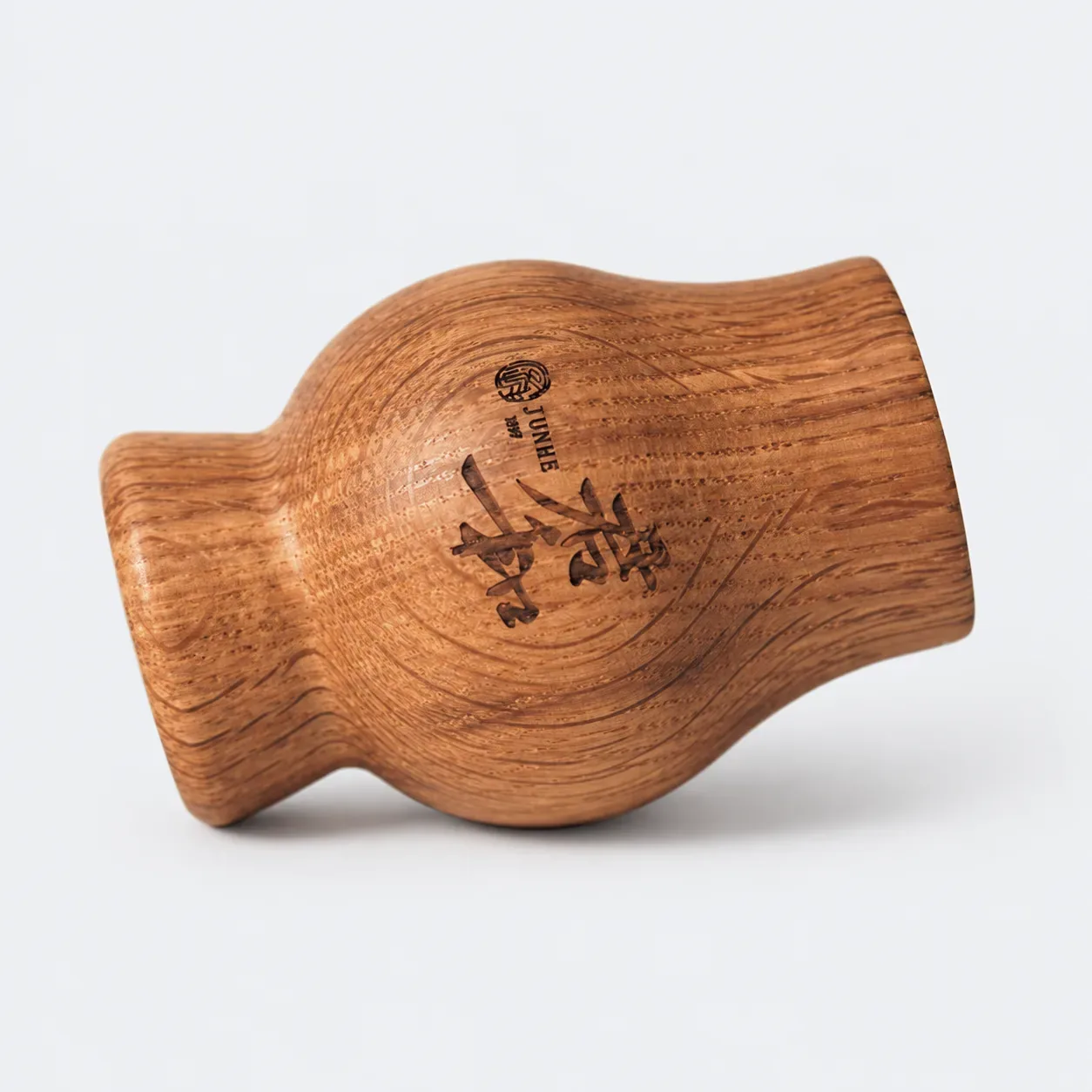
Understand natural grain and colour variation
American white oak gives each cup its own pattern and tone. The grain may appear stronger on one side, and two cups photographed together may not have identical colouring. A product photograph shows one example, not a promise that every piece will share the same pattern.
For a branded collection, consistency can come from the shape, engraving position and presentation while allowing the wood to retain its character. Ask to see several examples under similar lighting if you need to understand the likely visual range.
It also helps to separate natural variation from workmanship when reviewing samples. Agree which differences belong to the material and which details need to remain consistent across the order.
Choose a role for the cup
For personal use, the question is whether the cup suits your routine and the way you like to set a table. For a distillery shop, it may offer visitors a small object connected to a familiar material from their visit.
Explain that connection through the oak, the design and the intended use. There is no need to promise that a cup will transform the flavour of a drink. Accurate information gives customers a clearer reason to choose it.
At an event, decide whether the cup is part of the place setting, an item introduced during the experience or a take-home gift. That decision affects the quantity, presentation and instructions needed.
Confirm care guidance before ordering
Request product-specific instructions covering suitable drinks, temperatures, cleaning, drying and storage. Do not infer dishwasher suitability or a cleaning method from the material name alone. The guidance should match the finished cup you receive.
If you plan to use the cup in hospitality, review those instructions against your actual cleaning routine before ordering. For a gift, a short care card can make the information easy for the recipient to keep. Confirm the wording with the supplier rather than borrowing instructions from another wooden product.
Add branding without crowding the design
Junhe offers logo engraving on the cup body, with a wooden gift box available to discuss as part of the quotation. Review artwork at its actual size: a simple mark may remain clearer on the curved surface than several lines of small text.
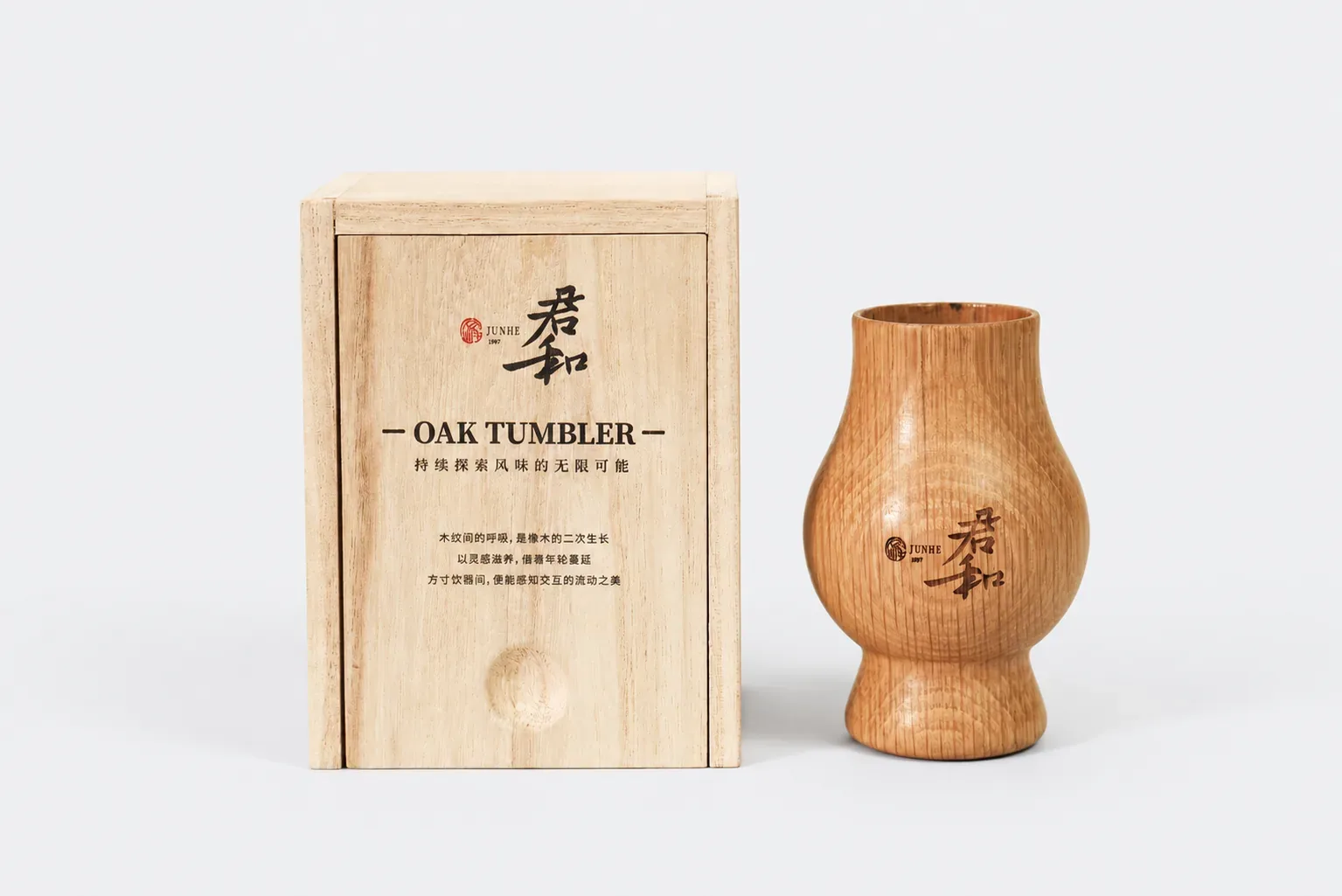
Let the grain remain visible around the engraving, and use a card or the packaging for a longer message. For ideas about placing the cup within a broader collection, explore our distillery gift and merchandise guide.
A well-chosen oak cup combines an appropriate size, a considered shape and clear information for its owner. To discuss the design for your collection, contact Junhe with your intended use, quantity and branding requirements.
Let’s create something for your brand.
Considering a product for your brand? Discuss an existing original design or a new idea with our design and manufacturing team.
Discuss Your Project